

Vibration Sensor
KSh 240.00 Excl. Tax
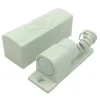
A vibration sensor, also known as a vibration detector or accelerometer, is an electronic device used to measure or detect vibrations and oscillations in physical objects and structures. It is commonly employed in various applications, including industrial machinery monitoring, structural health monitoring, automotive systems, and consumer electronics.
Vibration Sensor
A vibration sensor, also known as a vibration detector or accelerometer, is an electronic device used to measure or detect vibrations and oscillations in physical objects and structures. It is commonly employed in various applications, including industrial machinery monitoring, structural health monitoring, automotive systems, and consumer electronics. Here’s a detailed description of a typical vibration sensor:
Components:
- Sensing Element: The core of a vibration sensor is its sensing element, which is responsible for detecting vibrations. There are various types of sensing elements, including piezoelectric crystals, piezoresistive materials, and capacitive sensors. The choice of sensing element depends on the specific application and the desired sensitivity.
- Signal Conditioning Circuitry: Vibration sensors often include signal conditioning circuitry to process the raw sensor output. This circuitry can amplify, filter, and convert the analog signal into a format suitable for further processing or display.
- Housing or Enclosure: Vibration sensors are typically housed in a protective enclosure to shield the sensing element from environmental factors, such as moisture, dust, and physical damage. The design of the housing can vary depending on whether the sensor is intended for industrial, automotive, or consumer use.
Operation:
The operation of a vibration sensor depends on its type:
- Piezoelectric Sensors: These sensors use piezoelectric materials that generate electrical charges in response to mechanical deformation (vibration). When subjected to vibration, the piezoelectric material deforms, producing a voltage output proportional to the vibration intensity and frequency.
- Piezoresistive Sensors: These sensors rely on piezoresistive materials that change their electrical resistance in response to mechanical stress or deformation. Vibration causes a change in resistance, which is converted into a voltage signal.
- Capacitive Sensors: Capacitive vibration sensors measure changes in the capacitance between two closely spaced conductive plates. Vibration alters the spacing between these plates, resulting in a change in capacitance, which is then converted into an electrical signal.
Applications:
Vibration sensors find applications in various fields:
- Machinery Health Monitoring
- Structural Health Monitoring
- Automotive
- Consumer Electronics
- Aerospace
Vibration sensors are essential for monitoring and controlling dynamic systems and ensuring the safety and reliability of various mechanical and structural applications. Their versatility and sensitivity make them valuable tools in a wide range of industries.
Also Check:
Only logged in customers who have purchased this product may leave a review.
Related products

Security Accessories

Security Accessories

Security Accessories

Security Accessories
Reviews
There are no reviews yet.